
 English
 Français
 Español
 العربية
 繁体中文
 简体中文

Saudi Arabia eCall Regulation 2028 – SASO 2944:2023 Update
Saudi Arabia Postpones Mandatory eCall Implementation to 2028: What Vehicle Manufacturers Should Do Now
Saudi Arabia's eCall requirements have been an important consideration for automotive manufacturers preparing to enter the local market. In 2026, another regulatory update changed the implementation timeline.
Under the latest official decision, the mandatory application date of SASO 2944:2023 has been postponed from January 1, 2027 to January 1, 2028.
For manufacturers, the extra time is useful. But it should not be mistaken for a reason to put eCall development on hold.
What Has Changed?
SASO 2944:2023 covers the technical requirements for emergency call systems in motor vehicles.
The revised implementation date was confirmed in an official Saudi regulatory publication dated August 28, 2026.
The updated schedule sets January 1, 2028 as the mandatory date for all vehicle models covered by the standard.
This gives manufacturers additional time to review their existing vehicle configurations, communication modules and compliance documentation.
Why Does the Extra Time Matter?
eCall is not simply an SOS button connected to a mobile network.
A properly integrated system involves several components working together:
The telematics control unit (TCU)
Cellular communication hardware
GNSS positioning
Emergency call triggering logic
Voice communication
Minimum Set of Data (MSD) transmission
An issue in any of these areas can affect the overall performance of the emergency call function.
For vehicles developed for multiple markets, the communication configuration and regional requirements also need to be considered.
What Should Manufacturers Do Before 2028?
The revised timeline gives engineering teams an opportunity to address potential issues before the mandatory date.
A practical preparation plan should include:
1. Review the applicable standard
Confirm that the vehicle configuration and target model fall within the scope of SASO 2944:2023.
2. Check communication compatibility
Review cellular module support, network compatibility and the communication functions required by the applicable specification.
3. Validate emergency call functions
Check manual and automatic activation, voice connection, positioning information and MSD transmission where required.
4. Prepare technical documentation
Keep test reports, product specifications and software version records consistent with the final production configuration.
More Time Does Not Mean Less Preparation
The postponement to 2028 gives manufacturers more room to prepare, but eCall remains an important vehicle safety requirement for the Saudi market.
Companies that complete their technical assessment early will be in a better position when the implementation date approaches.
Blue Asia Labs supports automotive manufacturers and suppliers with eCall-related testing, technical evaluation and vehicle electronics compliance services.
 ブログ
Why Two-Wheelers Are Becoming As Complex As Passenger Cars
記事を読む
 ブログ
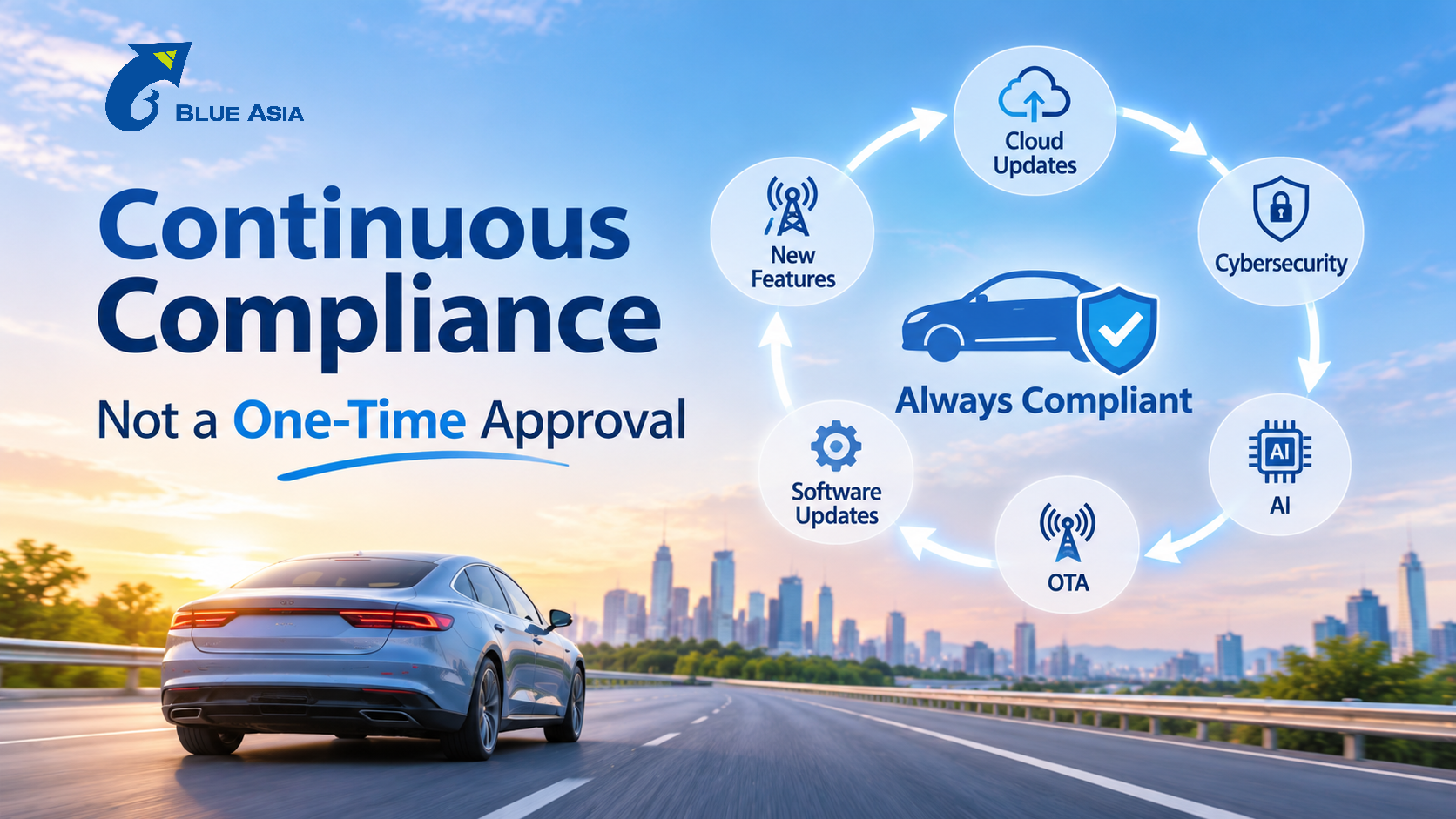
Why Future Vehicle Certification Will Be Continuous Instead of One-Time Approval
記事を読む
 ブログ
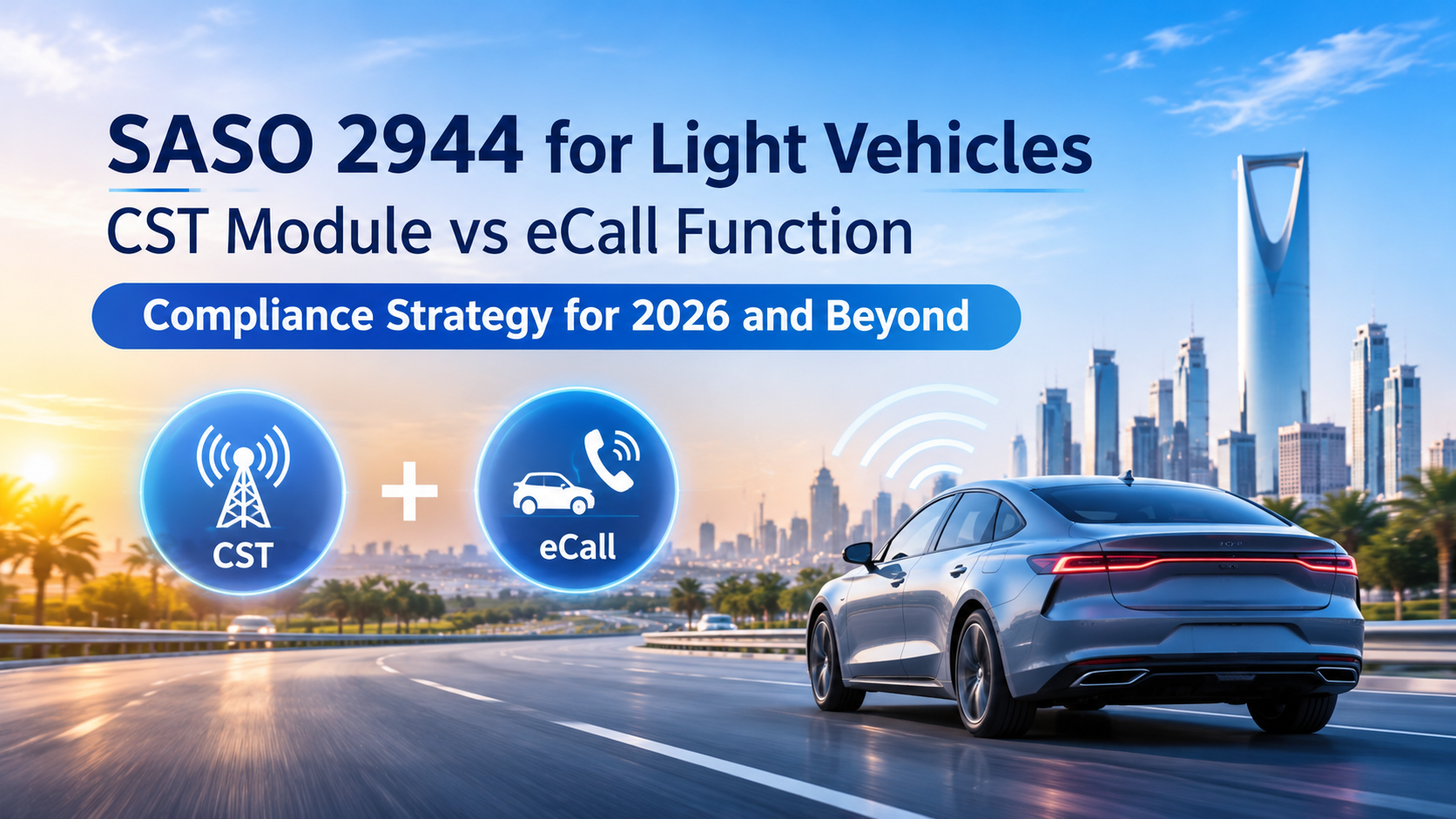
Saudi SASO 2944 for Light Vehicles: How to Separate CST Module RF Approval from Vehicle-Leve
記事を読む
 ブログ
Adding 4G/5G eCall to an Existing Vehicle? The Hard Part Is Not the Cellular Module.
記事を読む
 ブログ
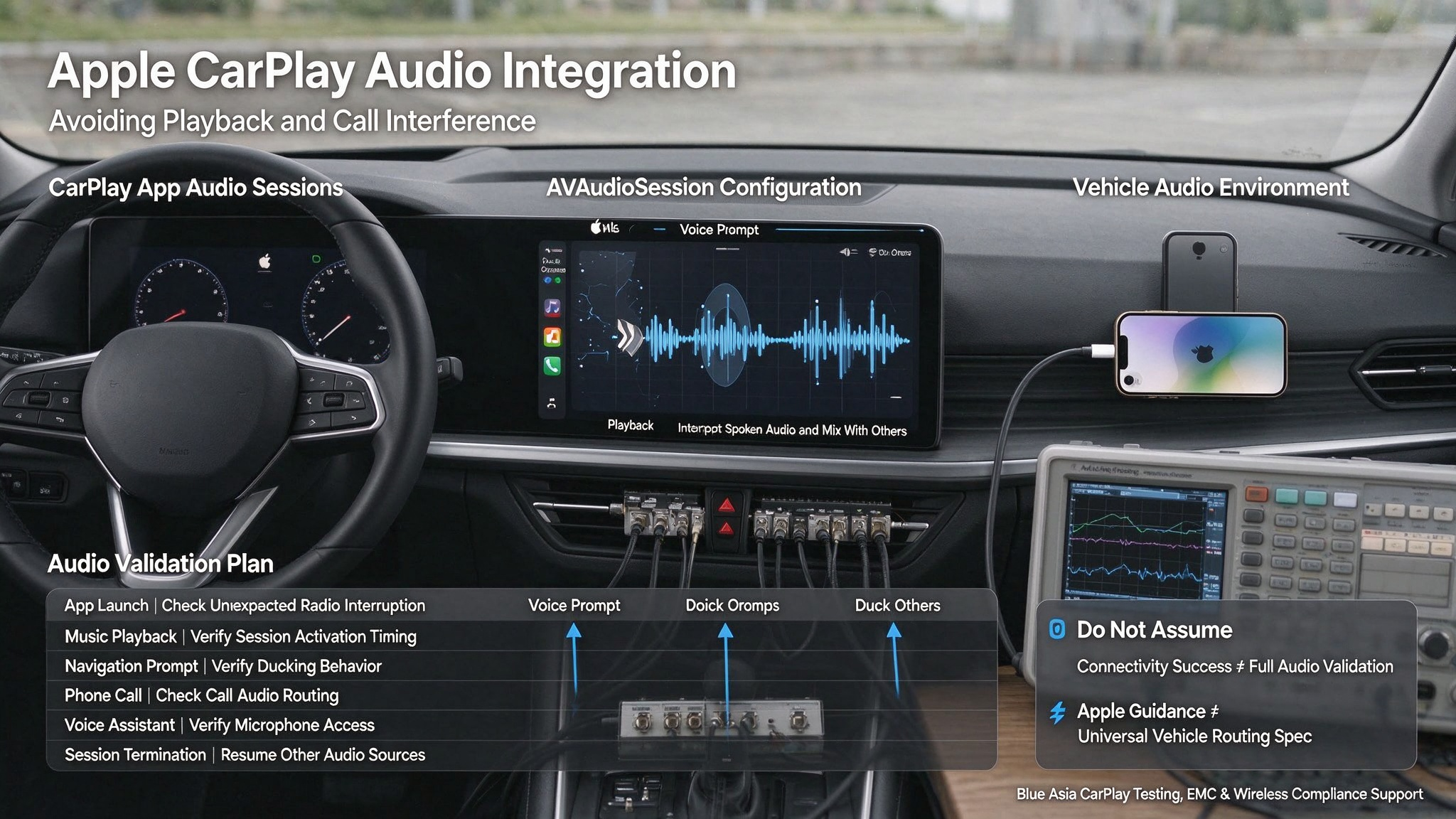
Apple CarPlay Audio Integration: How to Avoid Playback and Call Interference
記事を読む
 ブログ
DAB+ Receiver Validation: How to Manage Service Following and Station Information
記事を読む
関連サービス

 4000259520